
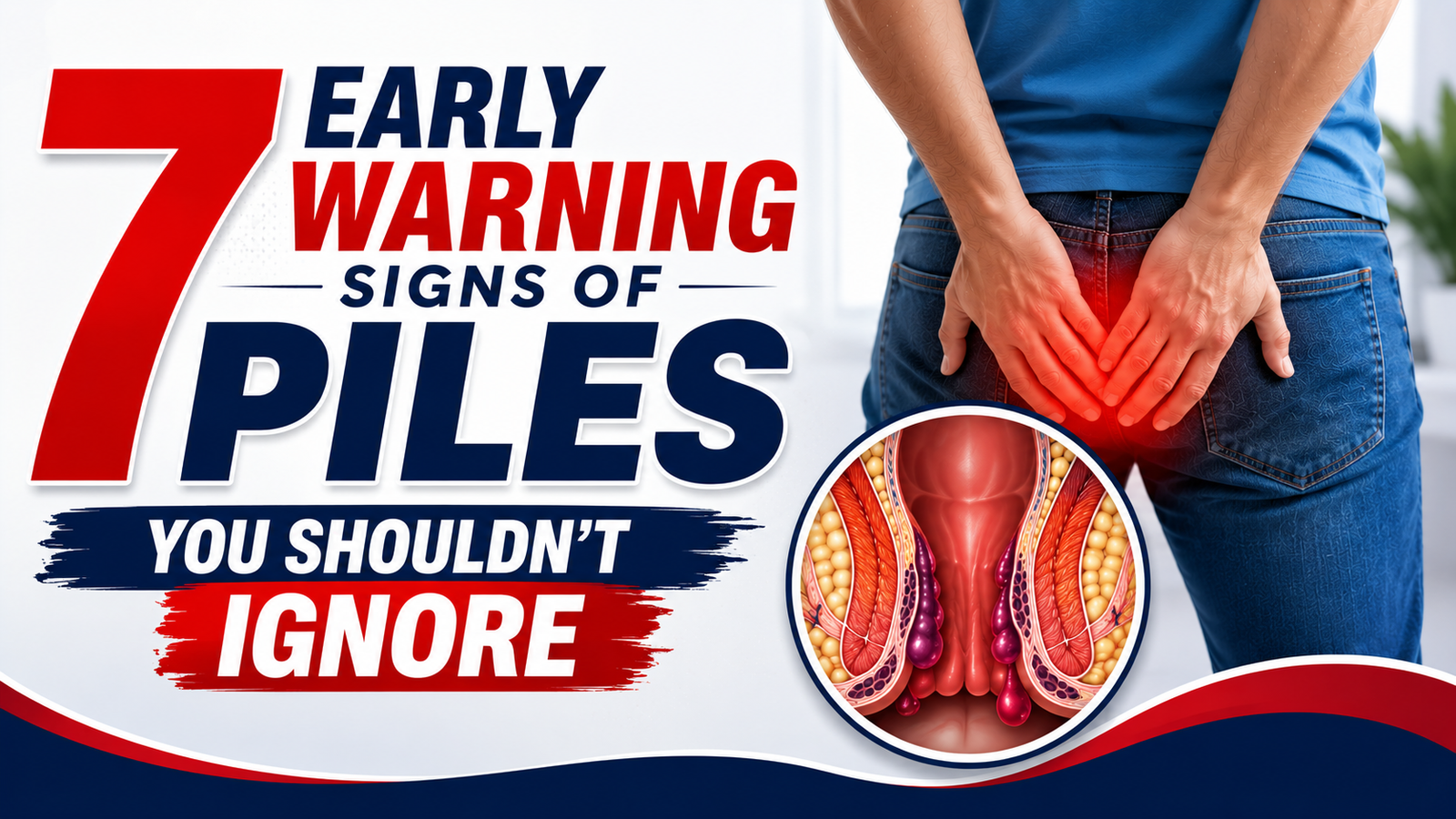
7 Early Warning Signs of Piles You Shouldn't Ignore
Piles, also known as hemorrhoids, are one of the most common anorectal conditions — yet most people delay seeing a doctor because of embarrassment or the assumption that symptoms will pass on their own.
Recognizing them early — rather than waiting them out — is what keeps treatment simple.
1. Bleeding During or After Bowel Movements
- Usually painless in early stages
- Often mistaken as a minor issue and ignored
- Can occur with both internal and external piles
Any recurring bleeding, even if painless, needs medical evaluation to rule out other conditions like fissures.
2. Itching or Irritation Around the Anus
- Mucus leakage from internal piles
- Irritation due to external piles
- Being mistaken for a hygiene-related problem
Using creams or powders without identifying the cause usually only delays proper treatment.
3. Pain or Discomfort While Sitting
- Discomfort typically builds gradually
- May worsen with prolonged sitting
- Can become sharp and localized if a clot forms
When discomfort like this is paired with a lump you can feel, it usually points to external piles.
More Signs to Watch For
4. A lump or swelling
A soft lump near the anal opening, especially noticeable after passing stool, is a hallmark of external piles. It may shrink at first but can grow larger and become persistent over time.
5. Incomplete evacuation
A sensation of not fully emptying the bowels, even right after passing stool, is common with internal piles — often leading to repeated straining.
6. Mucus discharge
Unexplained mucus discharge, separate from stool, frequently accompanies itching and is common with internal hemorrhoids.
7. Straining during bowel movements
Straining is both a cause and a symptom of worsening piles — increased straining can indicate piles are progressing.
One sign, repeated
Any of these seven signs occurring more than once — rather than a one-off — is a reason to get evaluated, not wait it out.
Internal vs. External Piles: What's the Difference?
| Sign | Internal Piles | External Piles |
|---|---|---|
| Bleeding | Often painless, bright red | Can bleed with pain |
| Lump or swelling | Usually no visible lump | Soft lump near the anal opening |
| Pain while sitting | Uncommon unless prolapsed | Common, worse if a clot forms |
| Mucus discharge | Common | Uncommon |
| Itching | From mucus leakage | From local irritation |
What Causes Piles in the First Place?
- Chronic constipation or diarrhea
- Straining during bowel movements
- Prolonged sitting, especially at a desk job
- A low-fiber diet and inadequate water intake
- Pregnancy, due to increased pelvic pressure
- Obesity
- Family history of piles
- Aging, which weakens supporting tissue around the rectum and anus
Most of these factors increase pressure on the veins in the rectal and anal area, which is what leads to the swelling and symptoms described above.
When Should You See a Doctor?
How Are Piles Diagnosed?
- A detailed history of your symptoms and bowel habits
- A physical examination of the anal area
- A digital rectal examination (DRE)
- Proctoscopy or anoscopy, to view internal hemorrhoids directly
- Additional tests like colonoscopy, if bleeding needs further investigation to rule out other causes
This evaluation also determines the grade of piles, which guides the choice of treatment.
Tips to Prevent Piles From Worsening
- Increase fiber intake through fruits, vegetables, and whole grains
- Drink plenty of water through the day
- Avoid straining or spending long periods on the toilet
- Take short breaks from sitting for long stretches
- Exercise regularly to support healthy bowel movements
- Avoid delaying the urge to pass stool
What Happens If You Ignore These Signs?
- Progression to higher, more severe grades
- Increased pain and discomfort
- Prolapse of hemorrhoidal tissue
- A greater likelihood of eventually needing surgical or laser treatment
Early evaluation keeps more treatment options open, including simpler, non-surgical approaches.
Can Piles Heal on Their Own?
Don't Wait for Piles to Get Worse
Frequently Asked Questions
Mild, early-stage piles can sometimes improve with dietary and lifestyle changes, but persistent or recurring symptoms usually need medical evaluation.
Not always. Internal piles often bleed painlessly, while external piles or thrombosed piles can cause noticeable pain along with bleeding.
If itching persists despite good hygiene and is accompanied by other symptoms like bleeding or a lump, it is more likely related to piles than hygiene alone.
Untreated piles can progress to higher grades, leading to increased pain, prolapse, and a higher likelihood of needing surgical or laser intervention.
Yes. Even mild or occasional symptoms are worth evaluating early, since accurate grading determines the least invasive treatment option available.
