
Key Takeaways
- Early Signs of Gallbladder Stones often resemble gas, acidity, or indigestion, making them easy to ignore.
- Bloating, fatty-food intolerance, and mild right-upper abdominal pain commonly appear months before severe attacks.
- Silent signs like nausea, pale stools, and unexplained tiredness may indicate early bile duct involvement.
- Recognizing Early Signs of Gallbladder Stones helps prevent complications like pancreatitis, jaundice, and infection.
- Women, diabetics, pregnant women, and overweight individuals have a higher risk of developing subtle symptoms early.
- Early diagnosis reduces the likelihood of emergency surgery and allows safer, planned treatment.
Introduction
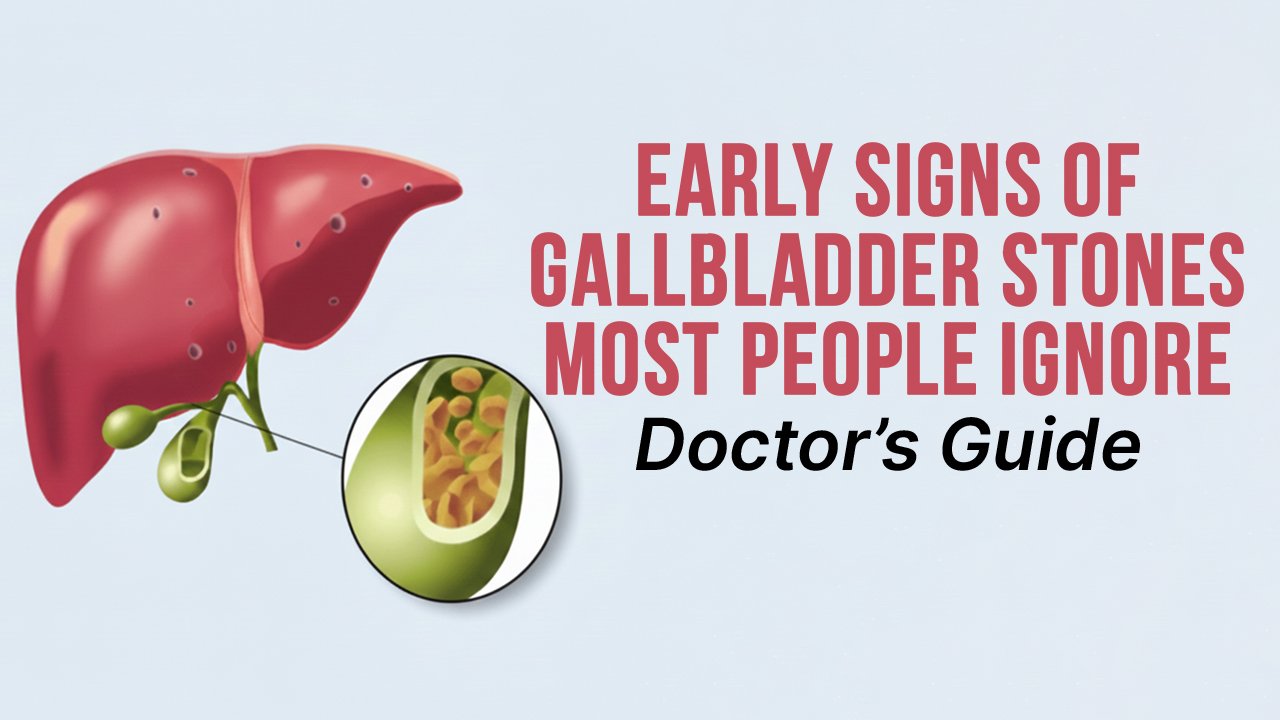
Early Signs of Gallbladder Stones include bloating after meals, indigestion from oily foods, mild right-upper abdominal pain, nausea, and burping. These early symptoms mimic common digestive issues, causing many people to ignore them until the condition escalates.
Why Early Gallbladder Stone Symptoms Are Often Ignored
Early Signs of Gallbladder Stones are subtle because stones initially cause only partial blockage. This mild irritation feels like ordinary gas, acidity, or heaviness after meals. As a result, these early signs blend into routine digestive discomfort and are often dismissed until symptoms become more frequent or harder to ignore.
How Gallstones Trigger Early Symptoms
Gallstones interfere with bile flow, which leads to early digestive changes:
1. Fat digestion becomes inefficient: Slow bile release makes fatty foods harder to break down.
2. Mild inflammation develops: Even slight irritation can create nausea or stomach discomfort.
3. Nerve irritation occurs: Pressure inside the gallbladder can cause pain that radiates to the shoulder or back.
Now that you understand why symptoms start gently, let’s look at the early digestive signs most people miss.
Most Overlooked Early Digestive Signs of Gallbladder Stones
These early digestive symptoms appear long before strong gallbladder pain.
- Bloating after meals: Reduced bile makes fatty meals harder to digest.
- Indigestion after oily or fried foods : The gallbladder struggles to empty fully, causing discomfort.
- Burping or recurrent acidity: Poor bile flow can trigger reflux-like symptoms.
- Fullness even after light meals: Slow digestion creates a lingering heavy feeling.
- Fat intolerance: Difficulty digesting oily food is one of the earliest signs.
As digestive signs increase, they often develop into distinct pain patterns.
Early Pain Patterns That Indicate Gallbladder Stones
These pain patterns strongly suggest Early Signs of Gallbladder Stones.
- Mild right-upper abdominal discomfort: Partial obstruction causes a dull ache under the ribs.
- Pain radiating to back or shoulder: The phrenic nerve sends gallbladder pain to the shoulder blade.
- Night-time abdominal pain: Symptoms often worsen when digestion slows at night.
- Pain after heavy or fatty meals: Gallbladder contractions push stones toward the duct.
- On-and-off pain episodes (biliary colic): Intermittent stone movement causes waves of pain.
Recognizing these patterns early can help avoid serious complications.
How Can Spotting These Early Signs Prevent Emergency Gallbladder Surgery?
Early Signs of Gallbladder Stones—such as nausea, bloating, or mild right-side pain—are early warnings that the gallbladder is under strain. Acting on these signs early allows for timely diagnosis and prevents severe complications like infection, bile duct blockage, pancreatitis, or jaundice. Early intervention significantly reduces the risk of emergency surgery and leads to smoother recovery.
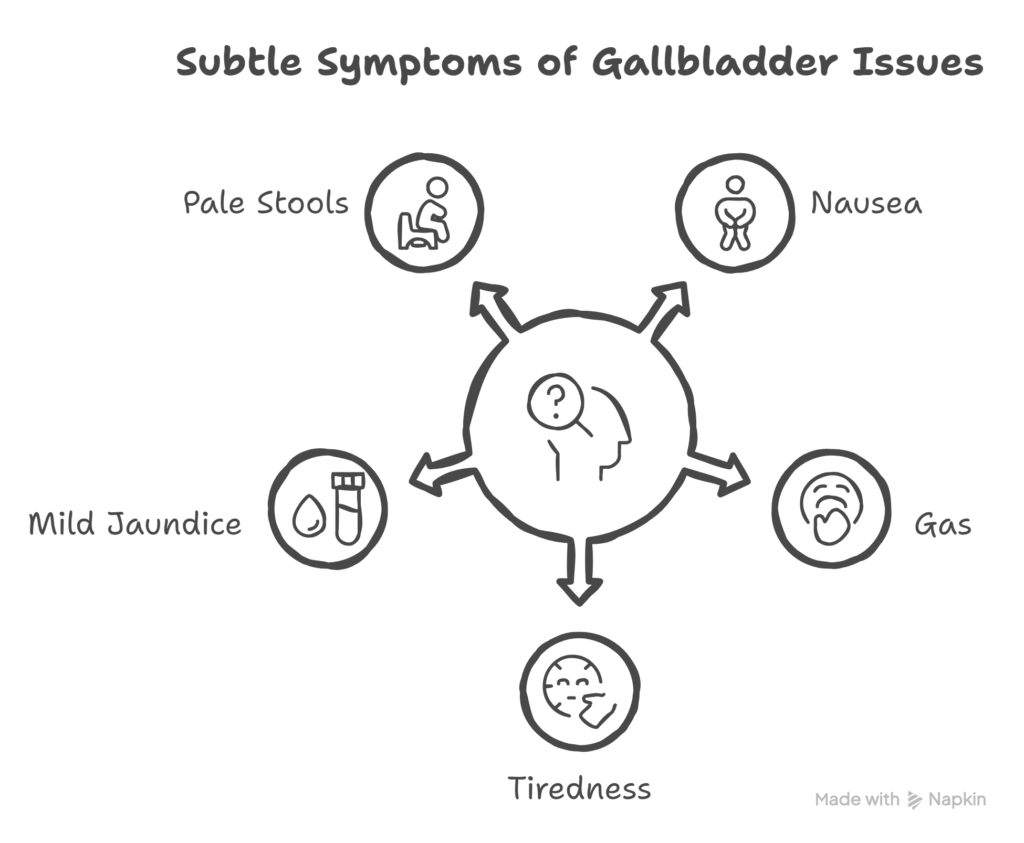
Silent or Atypical Early Symptoms Most People Miss
- Nausea without vomiting: Mild inflammation increases stomach sensitivity.
- Gas, abdominal tightness, or frequent burping: Slow bile movement leads to gas build-up.
- Unexplained tiredness: Poor fat digestion drains energy levels gradually.
- Mild jaundice: Dark urine or pale stool can indicate early bile duct obstruction.
- Pale or clay-colored stools: Reduced bile pigment flow causes noticeable stool color changes.
Since these signs are subtle, they’re often mistaken for everyday issues.
Gallbladder Symptoms vs Acidity vs Gastric Pain
A quick comparison helps differentiate Early Signs of Gallbladder Stones from stomach-related issues.
- Gallbladder Pain: Right-sided pain that may spread to the shoulder/back, often after fatty meals.
- Acidity/GERD Pain: Burning chest/throat sensation triggered by spicy or acidic foods.
- Gastric Pain: Central upper abdominal pain relieved by antacids.
Knowing the difference helps patients identify when symptoms are gallbladder-related.
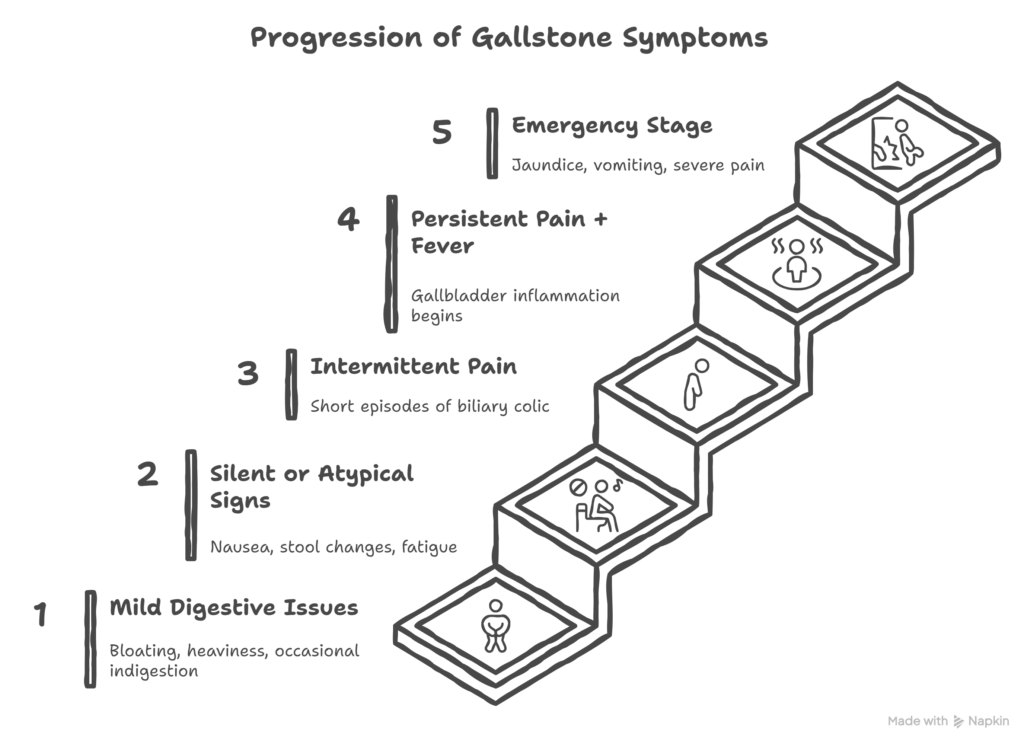
Escalation Flow: How Gallstone Symptoms Progress Over Time
- Early Stage – Mild digestive issues: Bloating, heaviness, occasional indigestion.
- Silent or atypical signs: Nausea, stool changes, fatigue.
- Moderate Stage – Intermittent pain: Short episodes of biliary colic.
- Advanced Stage – Persistent pain + fever: Gallbladder inflammation begins.
- Emergency Stage – Jaundice, vomiting, severe pain: Complete duct blockage or pancreatitis.
Acting during the early stages prevents escalation to emergencies.
Who Is More Likely to Ignore Early Symptoms?
- Women aged 20–50: Hormones affect bile concentration.
- Pregnant women: Progesterone slows gallbladder emptying.
- Overweight or rapid weight loss individuals: Both conditions change bile composition.
- Diabetics: Reduced nerve sensitivity masks early pain.
- Sedentary lifestyle individuals: Slow metabolism increases subtle symptoms.
These groups must pay extra attention to the Early Signs of Gallbladder Stones.
Doctor’s Self-Check Guide for Gallbladder Symptoms
- Do oily foods cause heaviness or discomfort?
This often signals impaired bile release.
- Does pain radiate to your shoulder or back?
A classic sign of gallbladder irritation.
- Is your stool pale or urine darker?
Indicates reduced bile pigment flow.
- Do you get pain at night?
Night pain often means early obstruction.
- Do symptoms repeat weekly?
Recurrent episodes strongly suggest gallstones.
If you answered “yes” to multiple signs, it may indicate early gallbladder disease.
When to See a Doctor for Gallbladder Symptoms
- Symptoms last more than 1–2 weeks
Persistent discomfort reflects ongoing gallbladder issues.
- Pain radiates to the shoulder/back
Suggests deeper inflammation.
- Indigestion after every fatty meal
A consistent sign of impaired bile flow.
- Pain worsens at night
Linked to biliary colic.
- Fever, vomiting, or jaundice
Indicate serious complications.
Don’t wait until symptoms escalate—early evaluation prevents emergencies.
Early Prevention Tips to Avoid Gallstone Attacks
- Reduce fatty and fried foods
Minimizes gallbladder strain.
- Eat regular meals
Prevents bile thickening.
- Stay hydrated
Keeps bile fluid.
- Slow, steady weight loss
Prevents bile imbalance.
- Early medical evaluation
Stops complications before they start.
Conclusion
Recognizing the early signs of gallbladder stones—such as bloating, fatty-food intolerance, mild right-side discomfort, or unexplained nausea—can make a significant difference in preventing serious complications. These subtle symptoms are often overlooked, but they are the body’s early warning signals of gallbladder stress. Paying attention to these changes and seeking timely medical evaluation helps avoid emergencies like infection, jaundice, or pancreatitis.
For accurate diagnosis and personalised treatment, Dr. Varun Kumar J, an experienced Laparoscopic, Laser & General Surgeon, provides expert care in managing gallbladder conditions. His patient-centric approach and advanced surgical expertise ensure safe, efficient, and minimally invasive solutions for those experiencing early or advanced gallstone symptoms.

About the Surgeon
Dr. Varun Kumar J is a highly experienced Laparoscopic, Laser & General Surgeon practicing in Bangalore and Mysore. He specializes in minimally invasive procedures for hernia, gallbladder disease, appendicitis, colorectal conditions, and anorectal disorders. With thousands of successful surgeries and a focus on enhanced recovery, he emphasizes safety, precision, and faster patient outcomes.
