
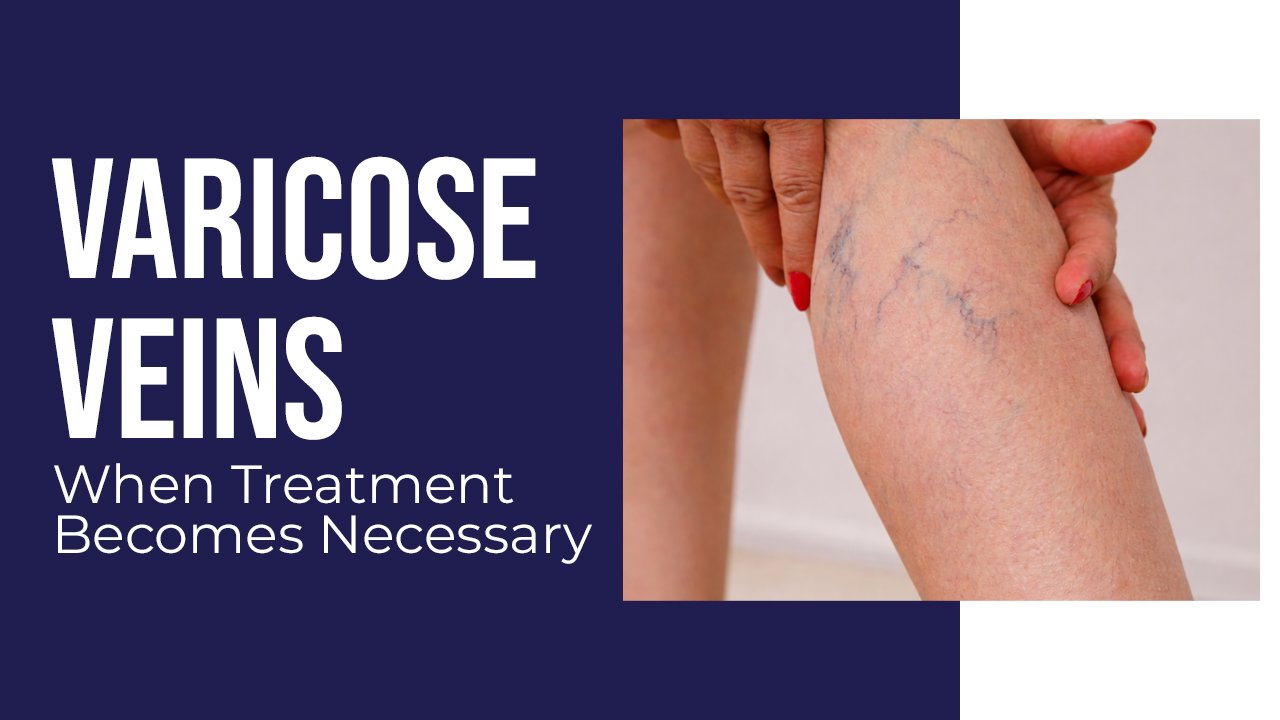
Key Takeaways
- Varicose veins do not always need immediate medical treatment.
- The decision depends on symptoms, progression, and clinical findings.
- Early-stage varicose veins may be managed with observation and lifestyle care.
- Persistent symptoms indicate when treatment becomes necessary for varicose veins.
- Timely evaluation helps prevent long-term discomfort and skin complications.
When Treatment Becomes Necessary for Varicose Veins: Why Timing Matters
Understanding when treatment becomes necessary for varicose veins is a common concern among people who notice visible veins or experience leg discomfort. Some delay evaluation because symptoms appear mild, while others worry early due to appearance alone.
Varicose veins progress differently in different individuals. While some remain stable for years, others gradually worsen and begin to affect comfort, mobility, and skin health. Knowing the right time to consider treatment helps patients avoid both unnecessary anxiety and delayed care.
What Are Varicose Veins and Why They Progress
Varicose veins develop when the valves inside leg veins weaken, allowing blood to pool instead of flowing efficiently back toward the heart. Over time, this increased pressure causes veins to enlarge and become visible.
Progression is influenced by factors such as prolonged standing, limited leg movement, weight changes, and inherited vein weakness. In some individuals, varicose veins remain largely cosmetic. In others, symptoms gradually increase and warrant medical attention, at which point structured approaches to varicose veins treatment in Bangalore are considered as part of clinical care planning.
Which Varicose Veins Treatment Option Is Necessary for My Condition?
The decision to treat varicose veins is never based on appearance alone. Clinically, the guiding question is whether treatment will relieve symptoms, prevent progression, and improve long-term comfort.
Doctors assess symptom severity, response to conservative measures, and the presence of complications before recommending intervention. Some patients benefit from monitoring and lifestyle guidance, while others require medical or procedural treatment. The aim is appropriate treatment at the appropriate stage.
Signs That Show When Treatment Becomes Necessary for Varicose Veins
- Persistent Leg Pain or Heaviness: Ongoing aching or heaviness, especially after standing, suggests compromised venous circulation.
- Swelling Around the Ankles or Lower Legs: Regular swelling that does not resolve with rest may indicate worsening vein function.
- Skin Changes Over the Affected Area: Darkening, thickening, or irritation of the skin can signal advancing vein disease.
- Progressive Enlargement of Veins: Veins that continue to enlarge or spread over time warrant evaluation.
- Symptoms Despite Preventive Measures: When symptoms persist despite lifestyle steps such as regular movement and leg elevation, guidance on how to prevent varicose veins naturally may no longer be sufficient on its own.
Stages of Varicose Veins and How Treatment Decisions Change
- Early Stage: Symptoms are mild and intermittent. Monitoring and conservative care may be appropriate.
- Moderate Stage: Symptoms become more frequent and noticeable. Clinical evaluation helps determine whether treatment is beneficial.
- Advanced Stage: Persistent pain, swelling, or skin changes usually indicate that treatment has become necessary.
Rather than relying only on stage labels, doctors focus on how symptoms affect the individual patient.
What Happens If Varicose Veins Are Left Untreated?
Varicose veins do not always cause complications if left untreated. However, in some individuals, symptoms gradually worsen over time. Increasing discomfort, persistent swelling, and skin-related changes may develop and affect quality of life.
Early recognition of when treatment becomes necessary for varicose veins allows timely intervention and helps prevent avoidable progression.
Does Everyone With Varicose Veins Need Treatment or Surgery?
No. Many people with varicose veins never require procedures or surgery. Treatment is recommended only when symptoms or complications justify it. Management is individualised, with the goal of balancing symptom relief, safety, and long-term outcomes.
When to Seek Specialist Evaluation for Varicose Veins
Specialist assessment is advisable when pain or swelling becomes persistent, symptoms progressively worsen, skin changes develop, or daily activities are affected.
Conclusion: Knowing When Treatment Becomes Necessary for Varicose Veins
Varicose veins do not always require immediate treatment, but they should not be ignored when symptoms progress. Understanding when treatment becomes necessary for varicose veins helps patients seek care at the right time, preventing unnecessary discomfort and long-term complications.
With appropriate evaluation and guidance, varicose veins can be managed safely and effectively.
Medical Disclaimer
Medical Disclaimer: This content is for general information only and does not replace professional medical advice, diagnosis, or treatment. Always consult a qualified healthcare provider for evaluation of varicose veins or related symptoms.
Frequently Asked Questions
Treatment is considered when symptoms such as pain, swelling, or skin changes persist or worsen.
Persistent discomfort, swelling, or visible skin changes indicate the need for medical evaluation.
Some cases worsen gradually, leading to increased discomfort and skin problems.
Rapid progression, persistent swelling, or skin discolouration are warning signs.
Yes. Many cases are managed with monitoring and lifestyle measures, especially in early stages.
