Many people notice bulging or twisted veins on their legs and assume it is a cosmetic issue – something they can live with. But varicose veins symptoms go beyond appearance. Left untreated, they can progress into painful, debilitating conditions including skin ulcers, bleeding, and deep vein complications.
Knowing which symptoms to watch for – and when to stop managing them at home – can prevent months of unnecessary suffering and more complex treatment later.
Dr. Varun Kumar J, vascular and laser surgeon at Hari Laser Clinics, Bangalore, explains the full spectrum of varicose veins symptoms and the specific warning signs that mean it is time to see a doctor without delay.
What Are Varicose Veins?
Varicose veins are enlarged, twisted veins that appear most commonly on the legs and feet. They develop when the small valves inside the veins stop working properly. Healthy valves push blood upward toward the heart. When they weaken or fail, blood flows backward and pools in the vein – causing it to stretch, bulge, and become visible under the skin.
They affect roughly 1 in 3 adults at some point in their lives and are more common in people who stand for long hours, are overweight, pregnant, or have a family history of the condition.
Common Varicose Veins Symptoms
Not every case of varicose veins looks the same. Symptoms range from mild and cosmetic to severe and medically urgent. Here is what to look for at each stage.
Visible Changes on the Skin
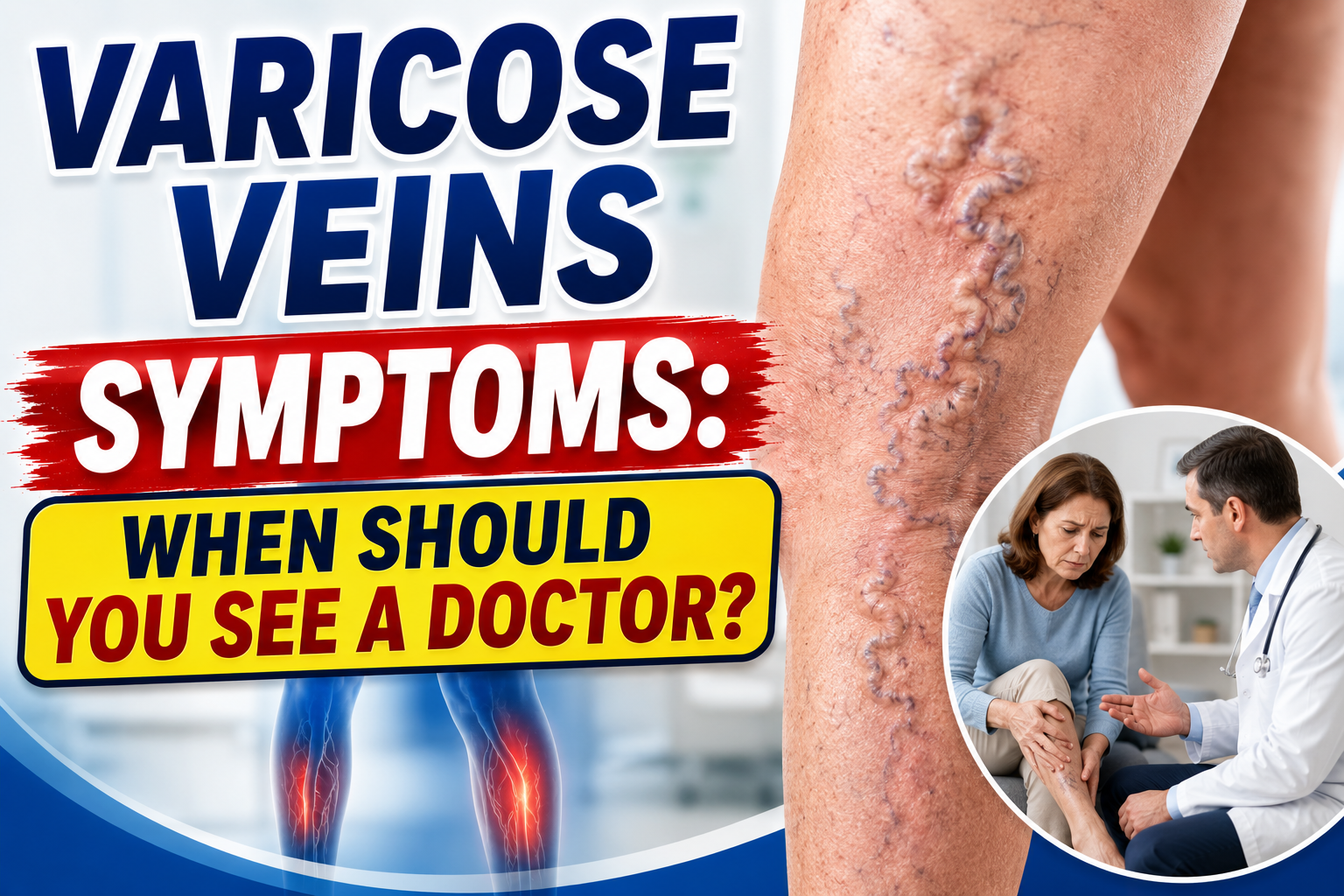
The most recognisable of all varicose veins symptoms is the appearance of dark blue or purple veins that bulge visibly beneath the skin – often described as twisted, rope-like, or cord-like in texture.
- Bulging, twisted veins on the calves, back of the knees, or thighs
- Spider veins – smaller, web-like clusters of red, blue, or purple veins close to the skin surface (a milder form, but often an early indicator)
- Skin discolouration around the ankles or lower leg – a brownish or reddish tint that signals blood is leaking from the veins into surrounding tissue
If you notice skin colour changes around the ankle, do not ignore it. This is a sign that the condition has progressed beyond the cosmetic stage.
Pain and Heaviness in the Legs
Aching, heavy legs at the end of the day are among the most common varicose veins symptoms that bring patients to the clinic. The pain is typically:
- A dull, throbbing ache concentrated in the calves or behind the knees
- A feeling of heaviness or tiredness in the legs, worse after standing or sitting for long periods
- Burning or throbbing sensation along the path of the vein
- Pain that improves when the legs are elevated
Many patients describe their legs as feeling “full” or “weighted down” by evening. If this happens regularly and is affecting your work, sleep, or daily routine – it is time for an evaluation.
Swelling
Swelling in the ankles and feet – especially swelling that worsens during the day and improves overnight when you lie down – is a classic sign of chronic venous insufficiency, the underlying condition that causes varicose veins.
This happens because blood pooling in the leg veins increases pressure, which pushes fluid out of the vessels and into surrounding tissue.
Swelling that does not go away with rest, or that is accompanied by skin changes, requires urgent medical attention.
Itching and Skin Irritation
Persistent itching around the varicose vein – particularly around the ankle or lower leg – is a varicose vein symptom that is frequently dismissed as dry skin or an allergy. It is neither.
The itching is caused by inflammation of the skin triggered by poor blood flow and fluid accumulation in the tissue. Scratching the area can break fragile skin and lead to open sores that are very slow to heal.
Muscle Cramps and Restless Legs
Sudden cramping in the calf muscles – especially at night – is a common but underrecognised varicose veins symptom. Patients often describe:
- Waking up with sharp cramp in the calf
- A restless, uncomfortable urge to move the legs at night
- Tingling or a crawling sensation in the legs when sitting still
If leg cramps are disturbing your sleep regularly, and you also notice visible veins or leg heaviness, varicose veins may be the cause.
Advanced Varicose Veins Symptoms - Do Not Ignore These
The following symptoms indicate that varicose veins have progressed to a more serious stage. If you experience any of these, see a specialist promptly – do not wait.
Skin Hardening (Lipodermatosclerosis)
The skin around the lower leg becomes hard, tight, and thick – almost woody in texture. This is caused by long-term inflammation from chronic poor blood flow. It is a direct precursor to venous ulcers.
Venous Ulcers (Open Sores)
Venous ulcers are open wounds that typically appear just above the ankle. They are slow to heal, painful, and prone to infection. They are the most serious complication of untreated varicose veins – and one of the most preventable if varicose veins are treated early.
If you have an open sore near the ankle that has not healed in 2 weeks, seek medical attention immediately.
Bleeding from a Varicose Vein
The skin over severely enlarged varicose veins becomes very thin. A minor knock or scratch can cause the vein to bleed – sometimes significantly. This can happen spontaneously, without any injury.
If a varicose vein bleeds, apply firm pressure, elevate the leg, and seek medical care the same day.
Sudden Redness, Warmth, and Hardness Along a Vein (Phlebitis)
When a varicose vein becomes inflamed, the overlying skin turns red, feels warm to touch, and the vein becomes hard and extremely tender. This condition is called superficial thrombophlebitis – it means a clot has formed in the vein.
While superficial phlebitis is not immediately life-threatening, it requires urgent evaluation to rule out extension of the clot into deeper veins (deep vein thrombosis or DVT), which is a serious medical emergency.
Sudden Leg Swelling, Redness, and Calf Pain – Possible DVT
If one leg suddenly swells significantly, turns red or feels warm, and the calf is painful to touch – this may indicate deep vein thrombosis. DVT requires emergency medical care. Do not drive yourself – call for help immediately.
Who Is at Higher Risk of Varicose Veins?
Certain factors significantly increase the likelihood of developing varicose veins symptoms:
- Prolonged standing or sitting – teachers, nurses, IT professionals, security personnel
- Pregnancy – increased blood volume and pressure on pelvic veins
- Obesity – increased pressure on leg veins
- Family history – a strong genetic component
- Age – vein walls weaken naturally with age
- Previous leg injury or surgery
- Women – more commonly affected than men, particularly after multiple pregnancies
If you fall into one or more of these categories and are noticing early varicose veins symptoms, proactive assessment is worthwhile – even before symptoms become painful.
When Should You See a Doctor?
See a doctor if you experience any of the following:
- Visible bulging veins accompanied by pain, heaviness, or swelling
- Skin discolouration or hardening around the ankle
- Itching or eczema-like irritation near a vein
- Leg cramps disturbing your sleep regularly
- A vein that bleeds, even from minor contact
- Any open sore near the ankle that is slow to heal
- Sudden redness, warmth, or hardness along a vein
- One leg significantly more swollen than the other
You do not need to wait for pain to become unbearable. Early evaluation leads to simpler, less invasive treatment – and prevents the condition from reaching the stage of ulcers or clots.
How Are Varicose Veins Treated in Bangalore?
Treatment depends on the severity of varicose veins symptoms and the underlying condition of the veins. Dr. Varun Kumar J offers the following options at Hari Laser Clinics:
- Compression stockings – for mild symptoms, to improve blood flow and reduce swelling
- Sclerotherapy – injection treatment that closes small to medium varicose and spider veins
- Laser ablation (EVLT – Endovenous Laser Treatment) – a minimally invasive, daycare procedure that uses laser energy delivered inside the vein to seal it permanently. No cuts, no stitches, recovery in 1–2 days
- Radiofrequency ablation – similar to laser, using radiofrequency energy
- Surgical stripping – for very severe or complex cases where minimally invasive options are insufficient
For most patients presenting with varicose veins symptoms in Bangalore, EVLT (laser treatment) is the preferred option – effective, permanent, and requires no hospital admission.
Frequently Asked Questions
No. While they may begin as a cosmetic concern, varicose veins symptoms can progress to pain, swelling, skin damage, ulcers, and clot formation. Early treatment prevents serious complications.
No. Once the vein valves are damaged, they do not repair themselves. The condition can be managed with compression and lifestyle changes, but it will not resolve without medical treatment.
Modern treatments like laser ablation (EVLT) are minimally invasive and performed under local anaesthesia. Most patients report minimal discomfort during the procedure and return to normal activity within 1–2 days.
Treated veins do not come back. However, new varicose veins can develop over time – particularly if the underlying risk factors (prolonged standing, obesity, pregnancy) are not addressed.
Varicose veins are common during pregnancy due to increased blood volume and pelvic pressure. They are usually managed with compression stockings during pregnancy and reassessed 3–6 months after delivery. Invasive treatment is generally deferred until after childbirth.
