
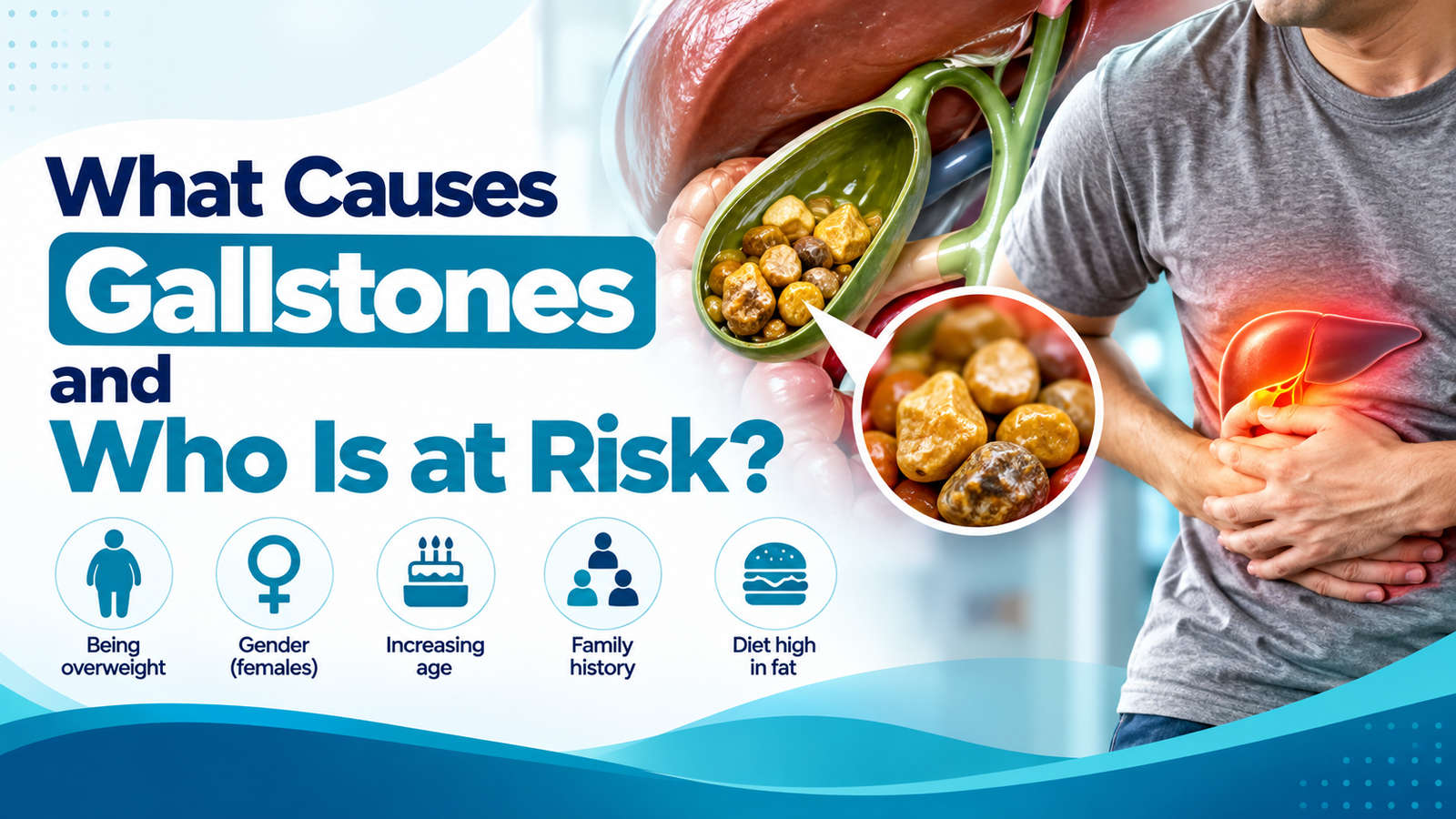
What Causes Gallstones and Who Is at Risk?
Gallstones are not only about fatty food or body weight. Here is how they form, who is more likely to develop them, and when it is time to see a doctor.
What causes gallstones, and why do some people develop them even when they appear healthy? Gallstones can form when the substances that make up bile become imbalanced and form solid particles inside the gallbladder. Several factors can influence how bile is formed, stored and released.
Having gallstones is not always linked to eating fatty food or being overweight. Age, hormonal changes, rapid weight loss, family history, certain medical conditions and the way the gallbladder functions can all play a role.
- Gallstones form when bile becomes imbalanced: too much cholesterol, too much bilirubin, or a gallbladder that does not empty properly.
- Age, female sex, pregnancy, excess weight, rapid weight loss, family history and diabetes can all raise the risk.
- Crash diets can increase risk, and even healthy, normal-weight people can develop gallstones.
- Severe pain, fever, yellowing of the skin or eyes, or repeated vomiting need prompt medical attention.
What Causes Gallstones in the First Place?
The gallbladder stores bile, a digestive fluid produced by the liver. Bile contains substances such as cholesterol, bile salts and bilirubin. Normally, these substances remain balanced and bile flows out of the gallbladder when needed.
Gallstones can form when this balance changes. The most common mechanisms include:
- Too much cholesterol in the bile
- Too much bilirubin
- Incomplete emptying of the gallbladder
Over time, these changes can cause small crystals to form. The crystals may gradually grow into gallstones.
So, when looking at what causes gallstones, it is important to consider more than just diet or body weight.
The 3 Main Changes That Can Lead to Gallstone Formation
Too Much Cholesterol in Bile
Most gallstones are cholesterol stones. They can develop when bile contains more cholesterol than it can keep dissolved. The excess cholesterol can form crystals, which may gradually develop into stones. This is one reason why changes in body weight and metabolism can be relevant when considering what causes gallstones.
Too Much Bilirubin
Bilirubin is produced when the body breaks down red blood cells. Certain liver conditions and blood disorders can increase bilirubin levels. When there is too much bilirubin in bile, pigment stones may form.
The Gallbladder Does Not Empty Properly
The gallbladder stores bile and releases it into the digestive system. If it does not empty adequately, bile can become more concentrated. This can contribute to the formation of crystals and eventually gallstones.
Therefore, gallstone causes are not limited to diet or body weight. Changes in how the gallbladder functions can also play a role.
Who Is More Likely to Develop Gallstones?
Not everyone with a risk factor will develop gallstones. Likewise, some people develop gallstones without having an obvious risk factor. Some factors that can increase the likelihood include:
Age
The risk of gallstones generally increases with age. Changes in metabolism and gallbladder function over time may contribute to this increased risk.
Female Sex and Hormonal Changes
Women have a higher risk of gallstones than men. Hormonal factors can influence cholesterol levels in bile and gallbladder movement. Pregnancy can also increase the risk because of hormonal changes and changes in gallbladder emptying.
Overweight and Obesity
Being overweight can increase the risk of gallstones because changes in cholesterol metabolism may affect the composition of bile. However, weight is not the only factor involved in what causes gallstones.
Rapid Weight Loss
This is an important point that is often overlooked. Losing a large amount of weight very quickly can change the way the liver processes cholesterol and can affect how the gallbladder empties. So, crash diets are not a reliable way to protect against gallstones.
Family History
If close family members have had gallstones, your risk may be higher. Genetic factors can influence how the body handles cholesterol and bile. Family history does not mean that gallstones are certain to develop, but it can contribute to overall risk.
Diabetes and Other Medical Conditions
Certain medical conditions can also increase the likelihood of gallstones. These include diabetes, some liver conditions and certain disorders that increase bilirubin levels. The overall risk depends on the person’s medical history and other factors.
Can Your Diet Really Cause Gallstones?
Diet can influence gallstone risk, but it is too simple to say that one particular food causes gallstones.
Dietary patterns that are high in unhealthy fats and low in fibre may contribute to risk, particularly when combined with other factors such as excess weight or metabolic problems.
A balanced diet, regular physical activity and maintaining a healthy weight can support overall digestive and metabolic health. However, healthy eating does not guarantee that gallstones will never develop.
Can Losing Weight Too Quickly Cause Gallstones?
Yes, rapid weight loss can increase the risk of developing gallstones.
This can happen during very restrictive diets or after significant weight loss over a short period. Changes in bile composition and gallbladder emptying can encourage stone formation. For this reason, gradual and sustainable weight management is generally preferable to crash dieting.
Already have gallstones and planning to lose weight? It is better to discuss an appropriate approach with a healthcare professional rather than making major dietary changes on your own.
Can Healthy People Get Gallstones?
Yes. A person can appear healthy, maintain a normal weight and still develop gallstones.
This is because what causes gallstones is not always a single visible lifestyle problem. Age, genetics, hormonal factors, bile composition and gallbladder function can all influence the process. Having no obvious risk factor does not completely rule out gallstones.
How Do You Know If Gallstones Are Causing Your Symptoms?
Some people have gallstones without experiencing symptoms. In other cases, a stone can interfere with the normal flow of bile and cause symptoms. Possible symptoms include:
- Pain in the upper right or upper middle abdomen
- Pain that may occur after eating
- Nausea or vomiting
- Abdominal discomfort
If you are experiencing symptoms and want to understand the early warning signs, information about the early signs of gallbladder stones can help you understand when evaluation may be appropriate.
Importantly, abdominal pain does not automatically mean that gallstones are the cause. Other digestive conditions can produce similar symptoms.
When Should You See a Doctor for Gallstones?
Recurring or severe abdominal pain should not be ignored, particularly when it occurs with other symptoms.
- Severe or persistent abdominal pain
- Fever or chills
- Yellowing of the skin or eyes
- Repeated vomiting
- Symptoms that keep returning
A doctor can assess your symptoms and determine whether further evaluation or treatment is needed. If gallstones are confirmed and treatment is recommended, gallbladder stone treatment options can be discussed based on your symptoms and individual condition.
Can Gallstones Be Prevented?
There is no guaranteed way to prevent every case of gallstones because some risk factors, such as age and genetics, cannot be changed. However, some habits may help reduce risk:
- Maintain a healthy weight
- Avoid crash diets and rapid weight loss
- Follow a balanced diet
- Include adequate fibre in your diet
- Stay physically active
- Manage conditions such as diabetes with appropriate medical care
These measures support overall health, but they do not guarantee that gallstones will not develop.
Frequently Asked Questions About Gallstone Causes
Who is most at risk for gallstones?
People with certain risk factors, including increasing age, female sex, pregnancy, excess weight, rapid weight loss, family history and some medical conditions, may have a higher risk.
What is the main reason people get gallstones?
There is no single cause for everyone. Gallstones can form when bile contains too much cholesterol or bilirubin, or when the gallbladder does not empty properly.
Can healthy people get gallstones?
Yes. Gallstones can develop even in people who do not have an obvious lifestyle or medical risk factor.
Does rapid weight loss cause gallstones?
Rapid weight loss can increase the risk of gallstone formation. Very restrictive diets and crash weight-loss plans may contribute to this risk.
Does family history increase the risk of gallstones?
Yes. Having close family members with gallstones may increase susceptibility, although it does not mean that gallstones will definitely develop.
Are gallstones more common in women?
Women have a higher risk of gallstones, partly because hormonal factors can affect bile composition and gallbladder function.
Conclusion
Understanding what causes gallstones is not about identifying one food, one habit or one medical condition. Gallstones can develop through changes in bile composition, gallbladder emptying, metabolism, hormones and genetic susceptibility.
Some risk factors can be modified, while others cannot. If you have recurring abdominal pain or other symptoms that may be related to gallstones, getting an appropriate medical evaluation can help determine the cause and the next step.
This article is for general informational purposes only and should not be considered a substitute for professional medical advice, diagnosis or treatment. If you have persistent or severe symptoms, consult a qualified healthcare professional.
Worried About Gallbladder Pain?
Get your symptoms evaluated by Dr. Varun Kumar J, Laparoscopic & General Surgeon in Bangalore.
