
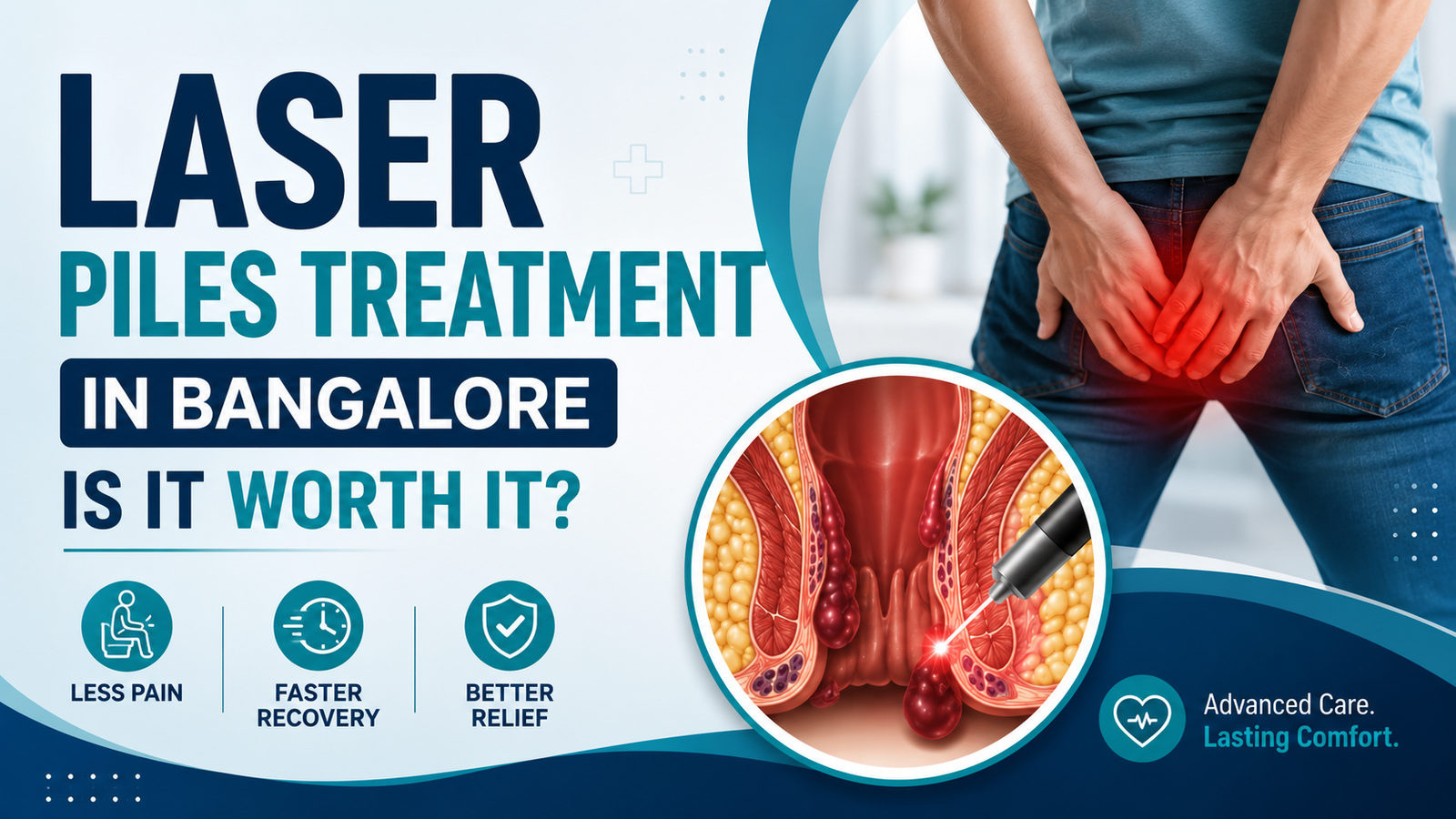
Laser Piles Treatment in Bangalore - Is It Worth It?
A clear, no-fluff breakdown of how laser hemorrhoid treatment works, who it actually suits, what recovery feels like, and what it costs – so you can decide with your eyes open.
Piles affect a large number of people and are among the most common anorectal conditions. Symptoms such as bleeding, pain, swelling, itching, and difficulty sitting can significantly disrupt daily life.
What Is Laser Piles Treatment?
- Less tissue damage
- Reduced bleeding
- Minimal post-procedure pain
- Faster recovery
- Shorter hospital stay
Because healthy surrounding tissue is better preserved, recovery is generally quicker than with traditional surgery.
How Does Laser Treatment Work?
- Shrink enlarged hemorrhoids
- Reduce blood flow to swollen veins
- Minimize tissue trauma
- Control bleeding during the procedure
Since larger incisions aren’t required, there’s less disruption to surrounding tissue — a key reason many patients find laser treatment more comfortable than conventional surgery.
Who May Benefit From Laser Piles Treatment?
- Persistent or recurrent bleeding piles
- Grade II or Grade III piles
- Prolapsed hemorrhoids
- Pain affecting daily activities
- Symptoms that haven't responded to diet or lifestyle changes
Suitability always depends on a proper clinical evaluation and grading of piles.
Benefits of Laser Piles Treatment
Reduced pain
Less tissue handling during the procedure translates to noticeably less post-operative pain compared to conventional surgery.
Minimal bleeding
Laser energy seals blood vessels as it treats hemorrhoidal tissue, reducing blood loss during the procedure.
Faster recovery
Many patients resume daily activities and return to work considerably sooner than with traditional surgery.
Shorter hospital stay
Laser procedures are often done on a day-care basis, avoiding multi-day hospital admission.
Lower tissue damage
Energy is focused precisely on target tissue — less injury to surrounding structures, smoother healing.
Laser vs. Traditional Piles Surgery
| factor | Laser Treatment | Traditional Surgery |
|---|---|---|
| Pain levels | Lower, less tissue handling | Higher, more tissue trauma |
| Bleeding | Minimal | Comparatively higher |
| Recovery time | Faster, often within days | Longer, typically 2-4 weeks |
| Hospital stay | Usually day-care | 2-3 days admission |
| Return to work | Within a few days | 2-3 weeks |
Is Laser Treatment Permanent?
- Chronic constipation
- A low-fiber diet
- Prolonged sitting habits
- Inadequate hydration
- Repeated straining during bowel movements
Long-term success comes from combining treatment with sustained lifestyle correction — not the procedure alone.
Are There Limitations to Laser Treatment?
What to Expect Before the Procedure
- A detailed discussion of symptoms and medical history
- A physical and proctoscopic examination to confirm the grade of piles
- Basic pre-procedure blood tests, if advised
- Guidance on diet and medication adjustments before the procedure
- A clear explanation of what the procedure involves and expected recovery
This step matters because not all piles are treated the same way — the right approach depends on grade, symptoms, and overall health.
What to Expect During Recovery
- Mild discomfort for a day or two is normal and usually manageable with prescribed medication
- A high-fiber diet and adequate hydration support easier, pain-free bowel movements
- Avoiding straining and prolonged sitting aids healing
- Most patients can resume light daily activities within a few days
- Follow-up visits help confirm healing is progressing as expected
Cost Considerations in Bangalore
- Costs vary based on the grade of piles and complexity of the case
- Day-care procedures reduce hospital stay costs compared to multi-day admissions
- Many health insurance policies in India now cover laser hemorrhoid procedures
- Faster recovery can mean fewer missed workdays, which offsets some of the higher upfront cost
It’s worth asking your clinic for a clear, itemized cost estimate and checking your policy for coverage before deciding.
How to Choose the Right Clinic
So, Is It Worth It?
Frequently Asked Questions
Laser treatment is generally associated with less pain than traditional surgery, since tissue injury during the procedure is reduced.
Recovery varies by individual, but many patients return to daily activities sooner than with conventional surgery.
Laser effectively treats existing hemorrhoids, but preventing recurrence also depends on ongoing lifestyle changes like diet, hydration, and reduced straining.
Patients with persistent symptoms, recurrent piles, or Grade II–III hemorrhoids are often good candidates, subject to clinical evaluation.
Yes. Early piles often respond well to dietary correction, hydration, and lifestyle changes without needing a procedure.
Hospital stay is usually shorter than with traditional surgery, and many procedures are done on a day-care basis.
